
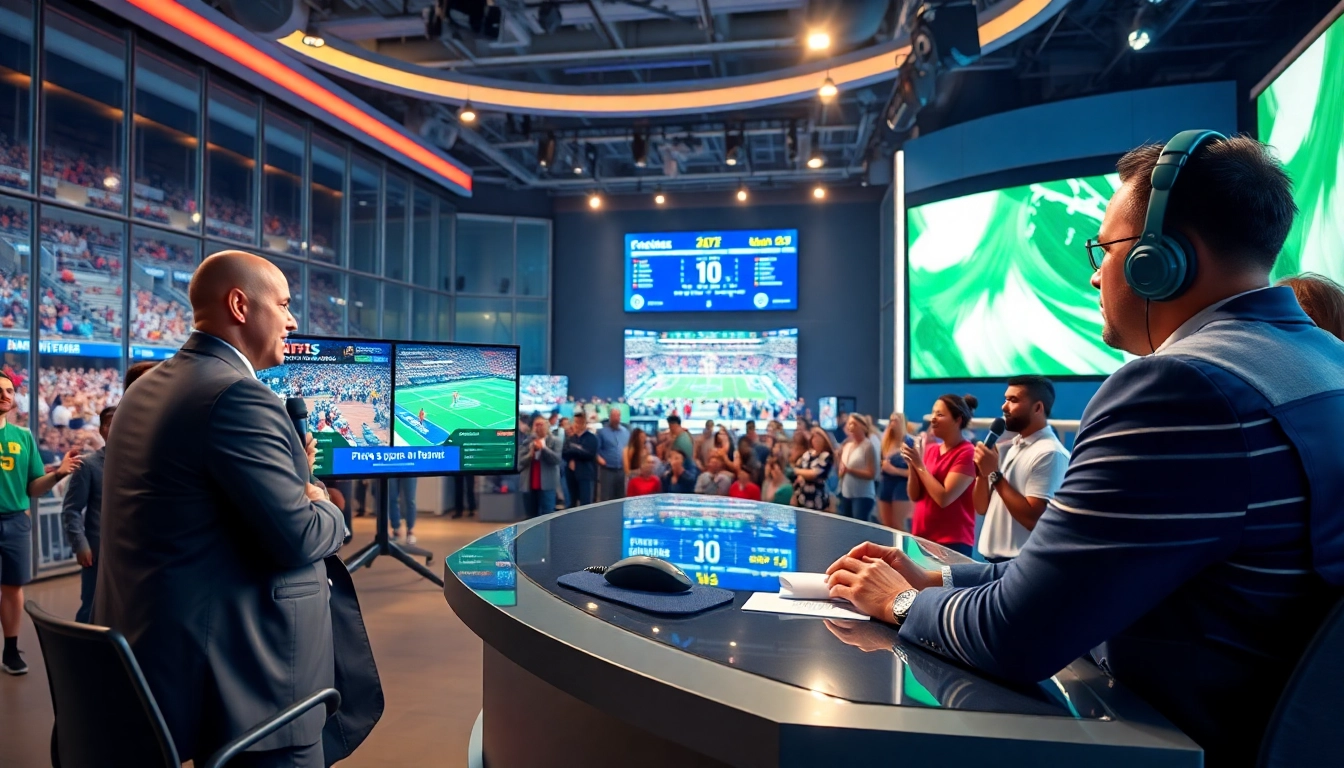
Understanding the Basics of Sports Broadcasting
What Is Sports Broadcasting?
Sports broadcasting refers to the live transmission of sports events over various media platforms, including television, radio, and online streaming services. It serves as a bridge between sporting events and audiences, allowing fans to engage with their favorite teams and athletes in real-time. The industry has evolved dramatically, shifting from traditional means of viewership to a digital landscape where accessibility and interactivity play pivotal roles. With the rise of new technologies, sports broadcasting has become integral to how we consume sports today. The peak of its evolution has made Sports Broadcasting more accessible than ever before.
Key Players in Sports Broadcasting
The landscape of sports broadcasting is fueled by various stakeholders, each playing a crucial role. This includes media companies that own broadcasting rights, production teams that create content, and on-air talent, such as commentators and analysts. In addition, athletes and teams are essential as they provide the content that draws viewers. Technology companies are also increasingly significant, offering the infrastructures that support streaming and broadcasting, including web platforms and social media promotions.
History and Evolution of Sports Broadcasting
The history of sports broadcasting can be traced back to the early 20th century, when radio first began transmitting sporting events. The first-ever radio broadcast of a sports event occurred in 1921, with a boxing match. Television broadcasting introduced a new dimension in the 1950s, revolutionizing the way fans experienced sports. Today, live streaming has changed the game entirely, allowing fans to watch events on-demand, leading to the rise of platforms like YouTube and Twitch. The historical trajectory shows a clear trend towards increased accessibility and viewer engagement.
The Technologies Driving Sports Broadcasting
Streaming Services vs. Traditional Broadcasting
The debate between streaming services and traditional broadcasting has gained traction in recent years. Traditional broadcasts, such as cable and satellite, offer controlled programming that has served audiences for decades. However, streaming services provide unparalleled flexibility, allowing users to watch content anytime, anywhere. This shift has led to the decline of traditional cable subscriptions as more viewers opt for personalized viewing experiences, demonstrating the necessity for broadcasters to adapt to changing consumer behavior.
Importance of High-Definition Video
High-definition (HD) video quality has become a non-negotiable standard in sports broadcasting. Viewers expect crisp, clear visuals, especially during fast-paced sports where details matter. The leap from standard definition to HD, and now to 4K and even 8K, has significantly enhanced the viewing experience. Technologies like video compression and advanced streaming codecs allow for the delivery of high-quality video even in low bandwidth scenarios. As the audience continues to demand better resolutions, investing in 4K broadcasting equipment has become essential.
Role of Social Media in Sports Broadcasting
Social media platforms are significant players in sports broadcasting today. They offer real-time updates, highlights, and behind-the-scenes content that enriches the viewer's experience. Platforms such as Twitter, Facebook, and Instagram not only promote live broadcasts but also foster interactive engagement among fans. Social media’s role extends beyond mere promotion; it drives conversations, builds community, and can even influence broadcast decisions by reflecting audience sentiment.
Key Elements of Effective Sports Broadcasting
Engaging Commentary Techniques
Effective commentary is critical to keeping viewers engaged. Commentators must possess a deep understanding of the sport and the current game dynamics. Techniques like storytelling, vocal variety, and providing statistical insights can greatly enhance the viewer's experience. Moreover, commentators who personalize their approach and connect with viewers on an emotional level can significantly improve ratings and audience retention. The best commentators create a narrative that turns the game into an experience rather than a mere event.
Visual Graphics and Their Impact
Visual graphics are essential tools that enrich the storytelling aspect of sports broadcasting. Infographics, player statistics, and real-time score updates can enhance viewer understanding and engagement. For instance, when a significant play occurs, complementary graphics showcasing statistics or replays can heighten the emotional impact for viewers. Viewers are more likely to remember the broadcast and engage with the content when visuals are effectively integrated.
Storytelling in Sports Broadcasting
Storytelling is central to effective sports broadcasting. Each game typically has its own narrative, shaped by the players, coaches, and historical rivalries. Great sports broadcasters transcend delivering mere facts; they weave compelling narratives that draw viewers in. Creating emotional arcs, highlighting players' backgrounds, and exploring the implications of a game's outcome contribute to a rich viewing experience that can resonate more deeply with audiences.
Challenges Facing Sports Broadcasting Today
Rights and Licensing Issues
One of the significant challenges in sports broadcasting arises from rights and licensing issues. Media companies must navigate complex negotiations to secure broadcasting rights, which can often be pricey. These deals may change rapidly, depending on audience demand, changing laws, or the introduction of new platforms. The uncertainty surrounding rights can leave fans frustrated and limit the availability of games in certain areas.
Competition from Online Platforms
The emergence of online platforms is reshaping sports broadcasting, posing new competitive challenges for traditional broadcasters. Services like YouTube TV and Hulu offer live streaming of many sporting events, often at lower prices than cable subscriptions. Additionally, exclusive streaming deals for specific leagues or teams can siphon audiences away from traditional broadcasters. As competition intensifies, traditional firms must innovate to retain viewers and offer compelling alternatives to online services.
The Impact of COVID-19 on Sports Events
The COVID-19 pandemic significantly impacted not only live sports events but also sports broadcasting. With games being canceled or played without audiences, broadcasters had to pivot rapidly to engage viewers through alternative content. The shift to virtual fan experiences and behind-the-scenes access became essential to maintaining audience interest. Long-term, the changes imposed during this period may lead to lasting alterations in how broadcast content is created and consumed.
The Future of Sports Broadcasting
Innovations to Watch For
Innovation will remain a cornerstone of the sports broadcasting landscape. Advances in augmented reality (AR) and virtual reality (VR) promise to create immersive viewing experiences that allow fans to feel as if they are part of the action. For example, AR can enhance broadcasts by overlaying statistics or player insights directly onto the field. Furthermore, artificial intelligence (AI) will play a significant role in content personalization, catering broadcasts to individual preferences and viewing habits.
Predictions for Audience Engagement
Audience engagement is expected to evolve alongside technological advancements. The rise of interactive broadcasts where viewers can influence commentary or choose camera angles indicates a shift towards a more participatory model. Social media integration will further deepen audience connections, allowing fans to interact directly with commentators and engage in real-time discussions during broadcasts. As audiences increasingly demand personalized experiences, adapting to these changes will be crucial for broadcasters.
How Sports Broadcasting Will Adapt to Change
As the sports broadcasting landscape continues to change, adaptability will be key. Broadcasters must embrace new technologies and understand audience preferences to stay relevant. Collaboration with tech companies for enhanced platforms and increased investment in quality content production will likely be necessary. Furthermore, understanding data analytics will help broadcasters tailor their offerings to meet changing demands, ensuring they can maintain viewer interest in an increasingly crowded marketplace.
Frequently Asked Questions
What is the primary function of sports broadcasting?
The primary function of sports broadcasting is to deliver live or recorded sports events to audiences through various media channels, ensuring fans stay connected to their favorite teams and athletes.
How has technology changed sports broadcasting?
Technology has transformed sports broadcasting by enabling streaming services, enhancing video quality, and allowing for real-time viewer interaction through social media and advanced broadcasting equipment.
What are the benefits of sports streaming services?
Sports streaming services offer flexibility, affordability, and accessibility, allowing fans to watch games live or on demand, often without the need for traditional cable subscriptions.
Why is commentary important in sports broadcasting?
Commentary is crucial as it provides context, analysis, and entertainment that enhance the viewer's experience, making the game more engaging through storytelling and insights.
What are potential future trends in sports broadcasting?
Future trends may include increased interactivity, personalized content delivery, the integration of AR and VR technology, and evolving audience engagement strategies through social media platforms.